Want to be in the loop?
subscribe to
our notification
Business News
COMPANIES FACE SHORTAGE OF QUALIFIED EMPLOYEES
Vo Quang Hue, Robert Bosch Vietnam General Director said his company is experiencing difficulties finding employees who are able to readily grasp and apply advanced technologies.
Vietnam should put employee vocational training on the front burner to meet the immediate demands placed on businesses by foreign investors, he said.
Yutaka Watanabe, general director of Towa Company in turn said his company has also experienced problems with the technological capacity of its workforce to such an extent that it can’t satisfy investor demand.
Yasuzumi Hiro Japan External Trade Organisation (JETRO) Managing Director in HCM City said the fundamental problem is that Vietnamese businesses in the past were not technologically advanced.
As a result, employees don’t have the competitive edge operating many types of machinery and equipment, which is going to require substantial investment in training to get them up to speed with the necessary skill set.
Businesses have been especially experiencing shortages in the skilled trades and qualified technicians. In particular, information technology (IT) firms in HCM City have had extensive problems filling job openings, Hiro said.
Ngo Duc Tri, Global Cybersoft Vietnam General Director said his company had to decline many orders on the back of employee shortage to fill them. The software market has great potential but with our limited staff of only 900 we are unable to keep up with demand.
Nguyen Duc Quynh, FPT Software Director in HCM City, echoed Tri’s views, and said the Japanese demand for sourcing work has been expanding.
FPT Software has plans to raise its number of employees by fivefold, Quynh estimated that the company needs to train around 10,000 computer programmers by 2020 to serve just its Japanese customers.
Since 2006, HCM City has attracted strong groups like Intel to invest in its high-tech sector. The city has been laying out a master plan for the IC industry’s human resources development.
Sherry Boger, Intel Products Vietnam General Director affirmed Intel’s willingness to assist HCM City in training human resources for the industry. She suggested the city coordinate with Intel to set up a training centre.
Numerous leading industry leaders have advised that Vietnam should lay out specific plans for dealing with the issue and establish a link between the Government and businesses to coordinate the development of a comprehensive road map to resolve it.
At a recent meeting with HCM City’s leaders, a representative from Italian business association said Vietnam’s employee training was not up to snuff and did not meet their needs.
Consequently they had to retrain all of their employees at great expense both in time and money. Training should be reevaluated in order to solve the dilemma. In fact, most graduates from universities and colleges lack the skills needed by businesses, which adds to work/skill gap.
The solution is to more effectively coordinate training at Vietnam’s universities, colleges and vocational schools with the needs of the business community, city leaders said.
Source: VNEP
Related News

CHARITY / EXHIBITION / OTHER EVENTS
INVESTMENT OPPORTUNITIES IN CA MAU PROVINCE: 96 PROJECTS AND 20 STRATEGIC PROJECTS
We are pleased to share with you information on investment projects currently seeking investors in Ca Mau Province. Should your esteemed company or association be interested, we kindly invite you to review the project information and complete the registration form via the links provided. The Ho Chi Minh City Investment and Trade Promotion Centre (ITPC) will consolidate the expressions of interest and facilitate connections with the leadership of Ca Mau Province at a meeting tentatively scheduled for 13 November 2026 in Ho Chi Minh City.

MEMBER CORNER / PROMOTIONS
BẰNG KIỀU LIVESHOW - A SYMPHONY OF LOVE UNDER THE GOLDEN GLOW
A masterclass in live music that takes the audience on a soulful journey through immortal love songs, guided by the peerless artistry and emotive storytelling of renowned singer Bằng Kiều. The highlight of the night is his seamless musical chemistry with special guest Triệu Hồng Ngọc, promising passionate and deeply resonant duets inside the magnificent Grand Ballroom.
INFRASTRUCTURE / CONSTRUCTION / LOGISTIC / PORT
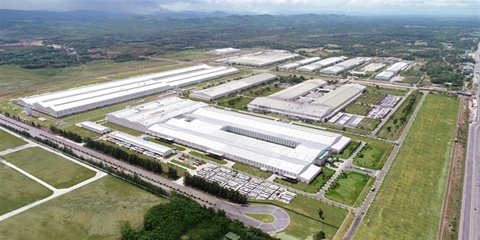
ĐÀ NẴNG GREEN-LIGHTS US$105 MILLION THAI DEVELOPMENT DEAL
The central city has approved an investment proposal by Thailand’s WHA Group to develop infrastructure for the 400ha WHA Đà Nẵng Industrial Park project on two communes of Thăng Bình and Đồng Dương, with an investment of more than VNĐ2.7 trillion (US$105 million). The city said it approved WHA Industrial Development International's status as an investor in the project, which is expected to take place between 2027 and 2034.
VIETNAM ECONOMY INVESTMENT
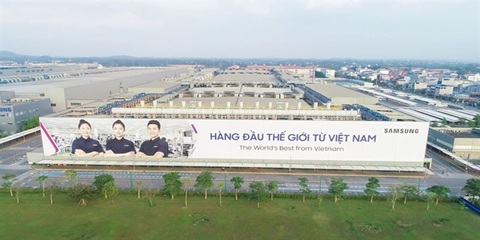
MOBILE PHONE EXPORTS RISE 20% TO $51.8 BILLION IN FIRST NINE MONTHS
Exports of mobile phones and components rose 20 per cent year-on-year to nearly US$51.8 billion in the first nine months of 2026, with China, the US and Republic of Korea accounting for more than half of the total. Shipments to the three markets reached a combined $26.18 billion, or 50.6 per cent of total exports of the product group during the period, according to data from the Vietnam Department of Customs under the Ministry of Finance.
INFRASTRUCTURE / CONSTRUCTION / LOGISTIC / PORT
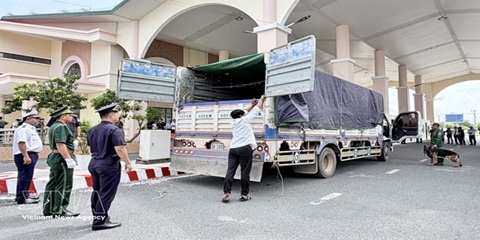
VIỆT NAM-CAMBODIA TRADE GATHERS PACE TOWARDS $20 BILLION TARGET
Trade between Việt Nam and Cambodia continues to grow, remaining a bright spot and a key pillar of bilateral cooperation as the two countries aim to raise two-way trade to US$20 billion in the coming years. After setting a record of more than $11.3 billion last year, bilateral trade reached about $8.7 billion in the first eight months of this year, up 8.3 per cent year on year.
VIETNAM ECONOMY INVESTMENT
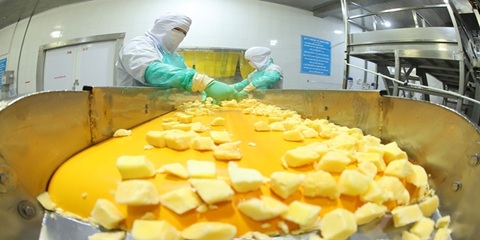
FRUIT AND VEGETABLE EXPORTS POISED TO HIT $10 BILLION IN 2026
Fruit and vegetable exports are on track to reach nearly US$10 billion in 2026, after rising 19.9 per cent year on year to nearly US$7.4 billion in the first nine months, driven by strong seasonal demand and abundant tropical fruit supplies. The Ministry of Agriculture and Environment said the growth reflected stronger international demand for fresh produce and processed agricultural products.
Events Sponsors






















